Mobility in older adults
Mobility in older adults
There are times when a person begins to notice that moving around is no longer as easy as it used to be. Perhaps walking a few blocks causes more fatigue, there is a fear of losing balance, or standing up and changing positions requires a bit more effort.
That does not mean independence has to disappear.
Mobility in older adults is important because it directly influences the ability to continue performing daily activities, participate in social spaces, and maintain a more active routine. In some cases, physical activity and rehabilitation can help preserve movement capabilities; in others, an appropriate technical aid can provide the necessary support to keep moving safely.
The key lies in understanding what each person needs. Not everyone requires the same level of support, which is why there is no single solution for maintaining mobility.
We invite you to read: Pressure ulcers associated with immobility
Why is it important to take care of mobility in older adults?
Mobility does not refer only to walking. It also involves being able to stand up, sit down, change positions, maintain balance, and move around safely inside and outside the home.
When these abilities begin to decrease, some daily activities can become more difficult. For example:
going for a walk;
going shopping;
visiting family or friends;
moving around inside the home;
attending social activities;
performing daily tasks.
Staying active, always according to each person's capabilities and conditions, can help preserve strength, balance, and confidence during movement.
Activities such as walking, swimming, cycling, or doing adapted exercises can be part of a routine. However, when there are significant mobility, pain, or balance issues, it is recommended to seek professional guidance.
What can affect mobility?
Reduced mobility can occur for various reasons. Some people experience gradual changes over the years, while others face difficulties after an injury, surgery, or illness.
Among the factors that can influence this are:
decreased muscle strength;
balance difficulties;
joint problems;
recovery after surgery or injury;
conditions affecting coordination;
fear of falling;
prolonged periods of inactivity.
Not all of these situations require a wheelchair or the same type of assistance. Occasionally, a person simply needs additional support to continue walking.
What type of aid can facilitate mobility in older adults?
This is where assistive technology and technical aids can make a difference.
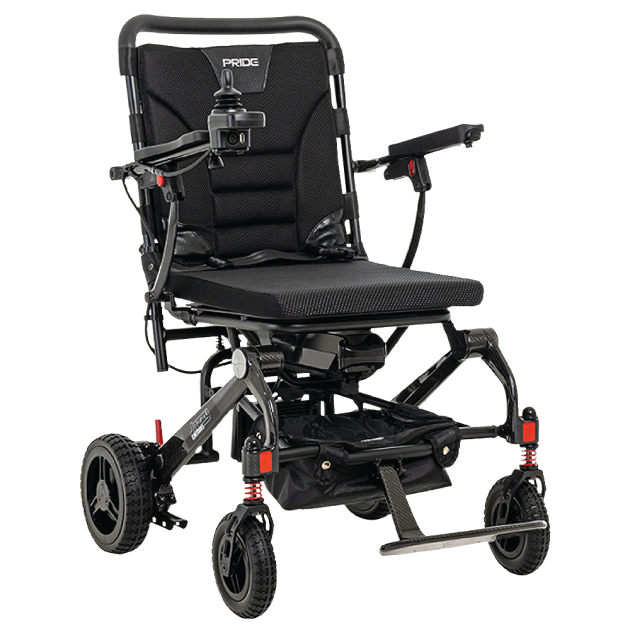
One person may need a walker to feel more stable. Another may walk without issue inside the house but get too tired when travelling long distances. There are also users who require a wheelchair that allows them to move comfortably and perform position changes.
Mobility in older adults can be supported with different equipment, depending on individual needs.
Main need |
Possible type of support |
|---|---|
Greater stability when walking |
Walker |
Difficulty travelling long distances |
Electric mobility scooter |
Need to travel while seated |
Wheelchair |
Need for position changes |
Reclining wheelchair |
This table does not replace a professional evaluation, but it helps to clarify that each piece of equipment serves a different function.
Four-point walker for greater stability
There are people who can still walk, but do not feel completely confident while doing so.
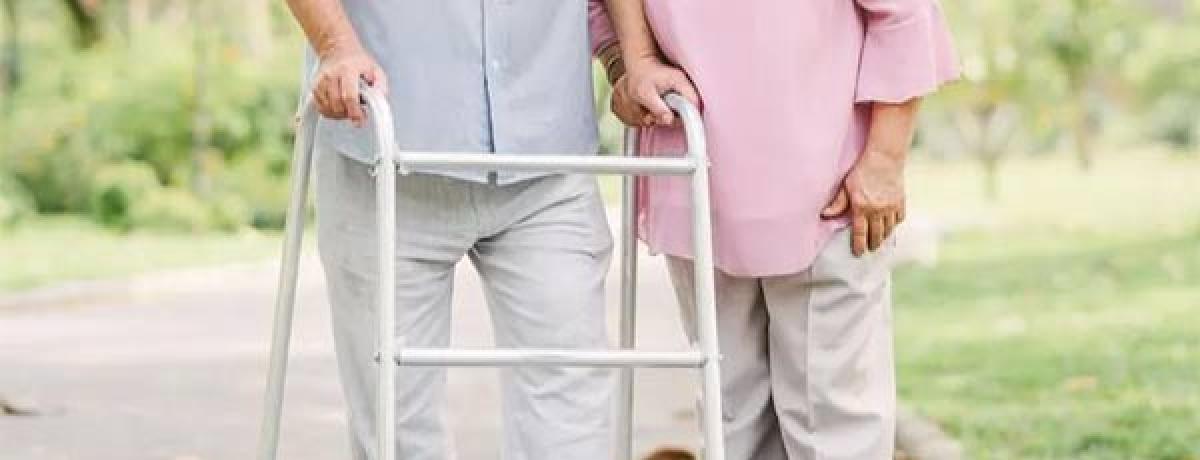
In these cases, a walker can provide an additional base of support. The goal is not to replace walking, but to accompany it when the person needs greater stability.
The folding four-point walker features characteristics such as:
option for rigid or reciprocating (step-by-step) use;
folding structure;
adjustable height;
easy to store and transport;
different color options.
Height is an important factor. A walker must adapt to the user's height and posture so that it can be used comfortably.
Limosa electric scooter for longer journeys
Now let's consider a different situation.
A person might walk around inside the house, but avoid going out because travelling long distances is exhausting. This can lead them to gradually reduce their activities outside the home.
An electric mobility scooter can be an alternative to facilitate these trips.
The Limosa electric scooter for adults features:
combination of large wheels;
height-adjustable seat;
adjustable tiller;
adaptable design for easy transport;
external charging system.
This type of equipment can be an alternative for those seeking to maintain their independence during longer journeys.
Reclining manual wheelchair for comfort and position changes
Some people need a higher level of support during their movements or need to remain seated for extended periods.
A reclining wheelchair allows for position changes and can provide different support points according to the user's needs.
Its features include:
quick-release wheels;
head support;
elevating legrests;
folding structure;
removable armrests;
reclining system;
steel frame.
The ability to make position changes can provide greater comfort for certain users, especially when remaining in the same posture for a long time becomes difficult.
You may also be interested in: What are the benefits of using a standing wheelchair?
How to choose a mobility aid?
This is one of the most important decisions. Choosing equipment simply because it looks comfortable or because someone else uses a similar one is not always the best option.
Before deciding, it is advisable to analyze aspects such as:
current ability to walk;
balance;
strength;
the distances that need to be covered;
where the equipment will be used;
the need to transport it;
the comfort and support required;
mobility or rehabilitation goals.
A simple question can help you get started
What activity is the person stopping doing due to their difficulty moving?
The answer can help better guide the search.
If the problem is feeling insecure while walking, a walking aid may be needed. If the main issue is long distances, a scooter may be more suitable. If the person needs to remain seated to move around, a wheelchair may be the right option.
How can assistive technology support independence?
Assistive technical aids have a very clear objective: to reduce some of the barriers that hinder daily activities.
In the case of mobility in older adults, they can help a person continue moving around and participating in different activities.
Among the available solutions are:
walkers;
wheelchairs;
electric scooters;
mobility support equipment;
products used in rehabilitation processes.
The important thing to remember is that the equipment should adapt to the person, not the other way around.
A product may have many features, but if it does not address the user's actual needs, it probably will not be the best choice.
Mobility in older adults starts with finding the right support
Maintaining mobility in older adults does not mean that everyone has to walk without help.
For some, preserving mobility can mean continuing to walk with the support of a walker. For others, it might be covering greater distances with a scooter or relying on a wheelchair that facilitates travel and offers greater comfort.
What matters is not focusing solely on the difficulty, but on what the person still wants and needs to do.
At Loh Medical, we work to offer various mobility and assistive technology solutions, such as walkers, electric scooters, and wheelchairs, that can meet each user's needs.
Because, in the end, independence does not always mean doing everything without help. Many times, it means having the right support to keep moving and participating in daily life.